THE REINHARD EDIT
Necklaces and pendants collection in Athens
A necklace draws a line around the body; a pendant gives that line a point of focus. Begin by deciding which element matters most to you. You may prefer the rhythm of the chain itself, the shape of a single pendant or a considered arrangement of several pieces.
Compare necklace and pendant proposals before choosing a direction. For a personal design, discuss the chain and pendant dimensions, component specification and quotation through the bespoke service. Bespoke necklaces and pendants · Request a personal quote
The collection
Original digital design proposals. Budgets are indicative; materials, feasibility and a final quotation are confirmed through a personal consultation.
Euphrosyne
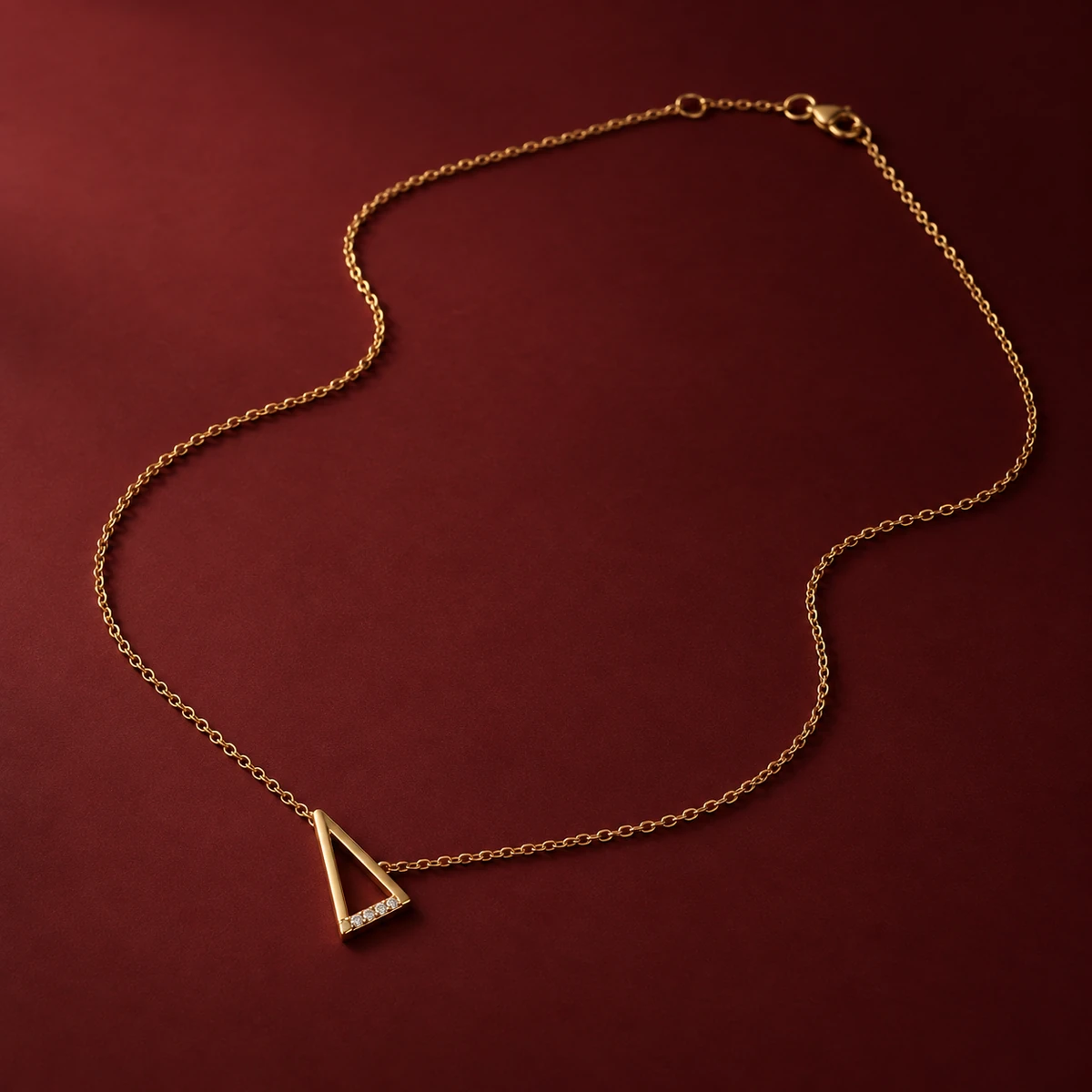
Euphrosyne introduces an open, asymmetric triangle to a fine chain, making the space within the shape part of its architectural expression. The contrast between the delicate line and the angular focus creates a distinctive composition, with asymmetry lending the familiar triangle fresh visual interest.
Indicative design budget: €2,100
Themis
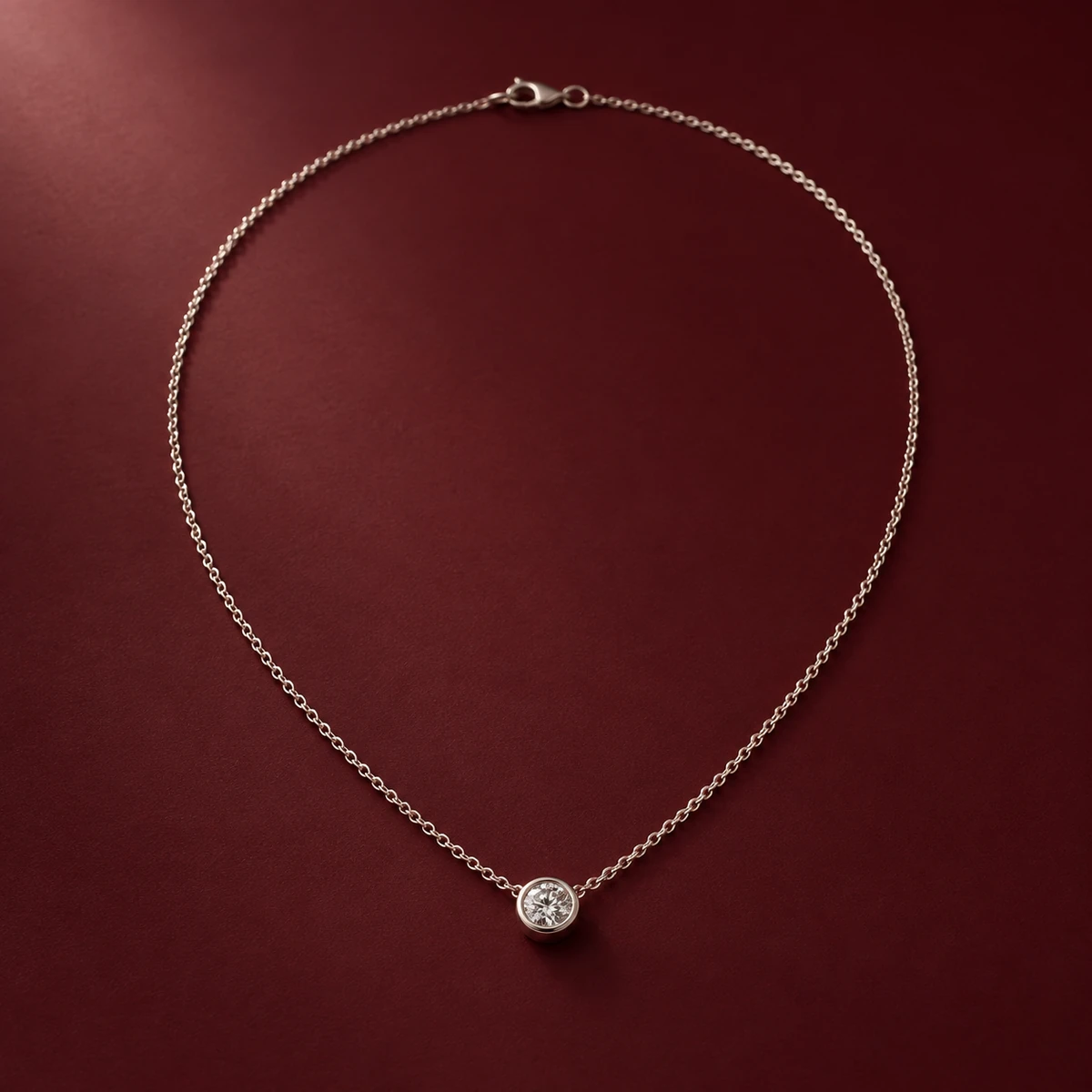
Themis gives a delicate chain a quiet centre through a single round accent, keeping the composition deliberately simple and visually focused. The circular form becomes the reference point for the finer line around it, expressing the design through balance rather than a succession of details.
Indicative design budget: €2,700
Dike
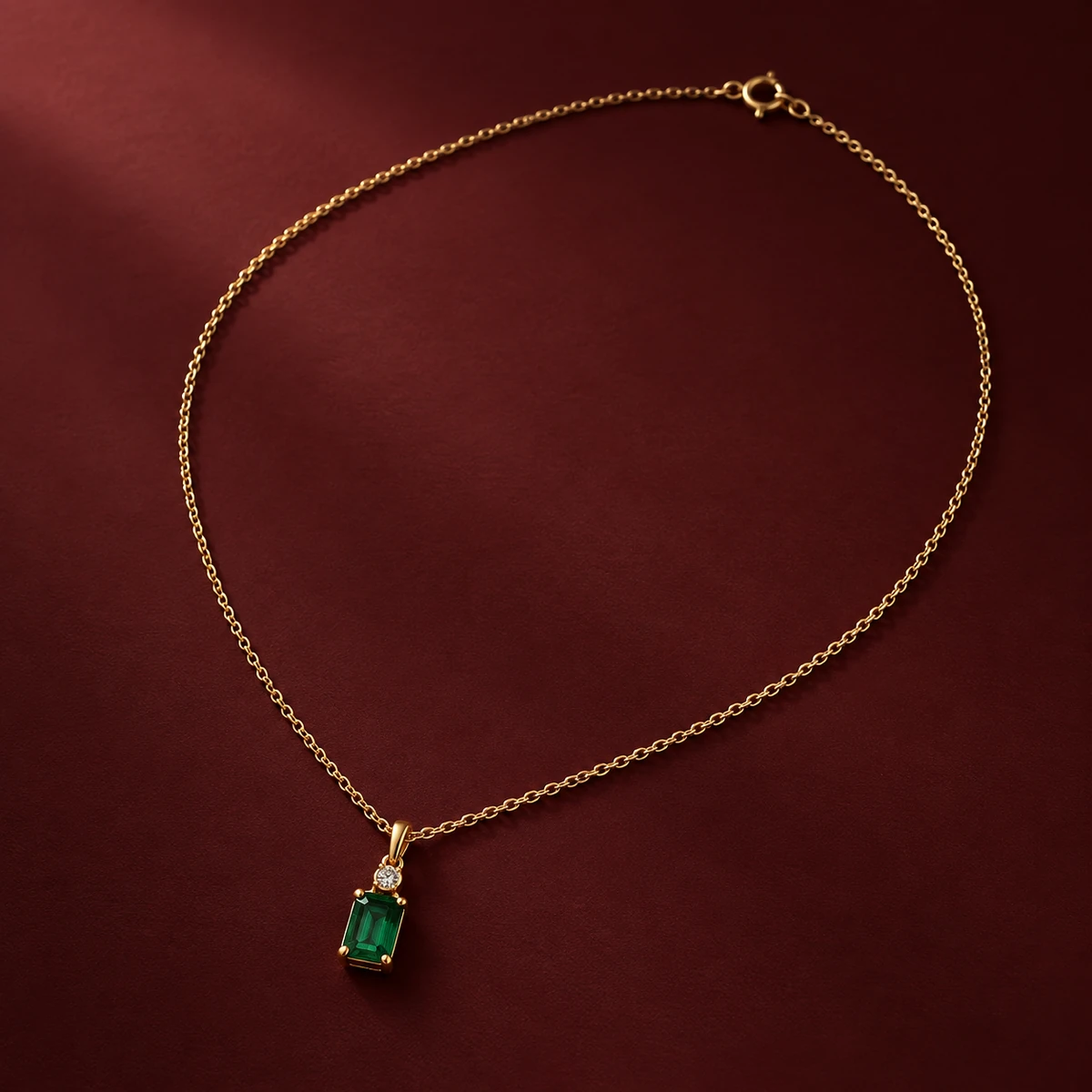
Dike suspends a deep green rectangle beneath a small point of light, setting a concentrated colour field against a restrained luminous accent. The simple vertical relationship lets the contrast carry the composition, giving the rectangular form a strong and clearly defined visual presence.
Indicative design budget: €3,300
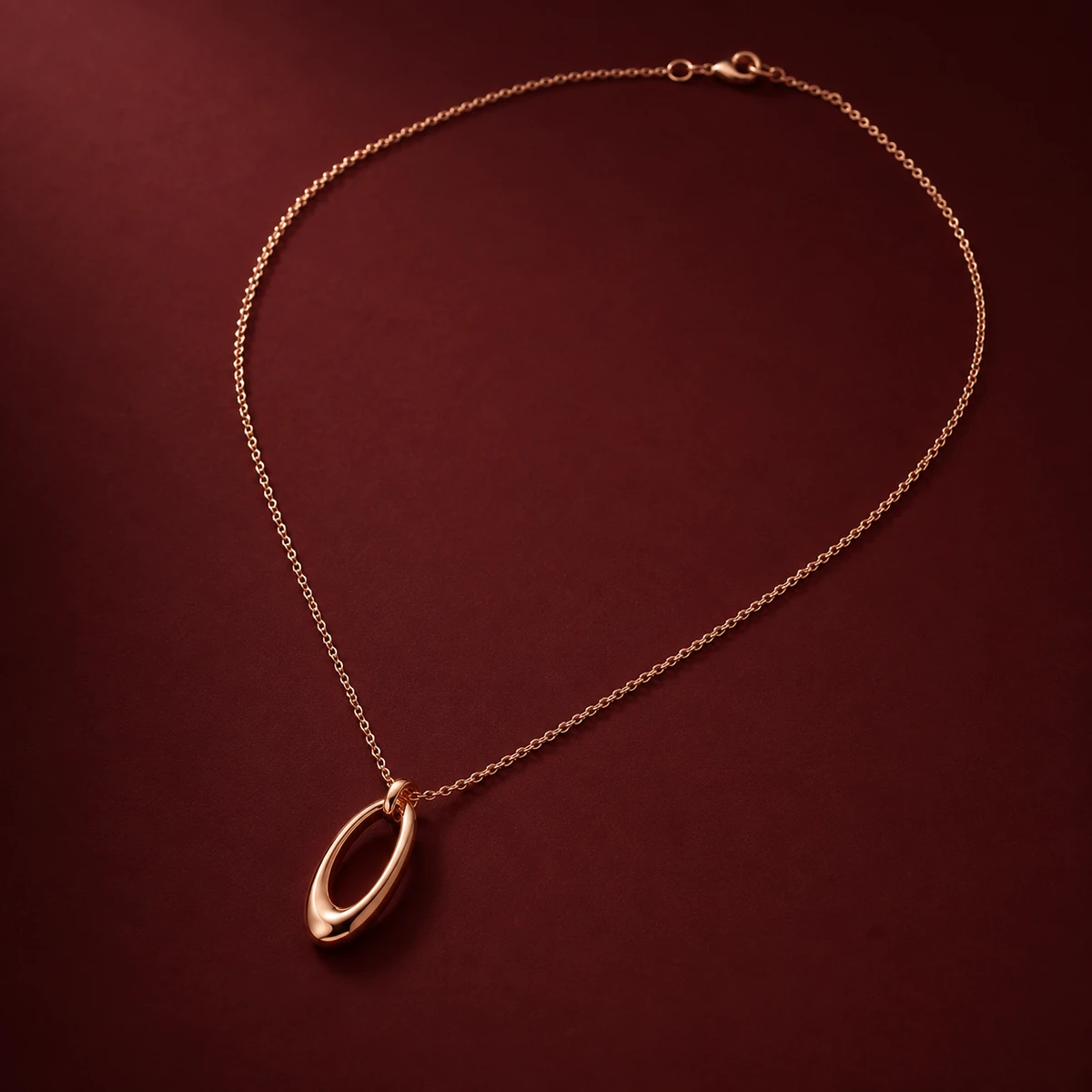
Eunomia
Eunomia stretches an open oval into a narrowing, fluid outline, allowing its changing proportions to become the central feature of the design. The space enclosed by the curve contributes to the sculptural effect, creating a composition with an expressive sense of continuity.
Indicative design budget: €1,800
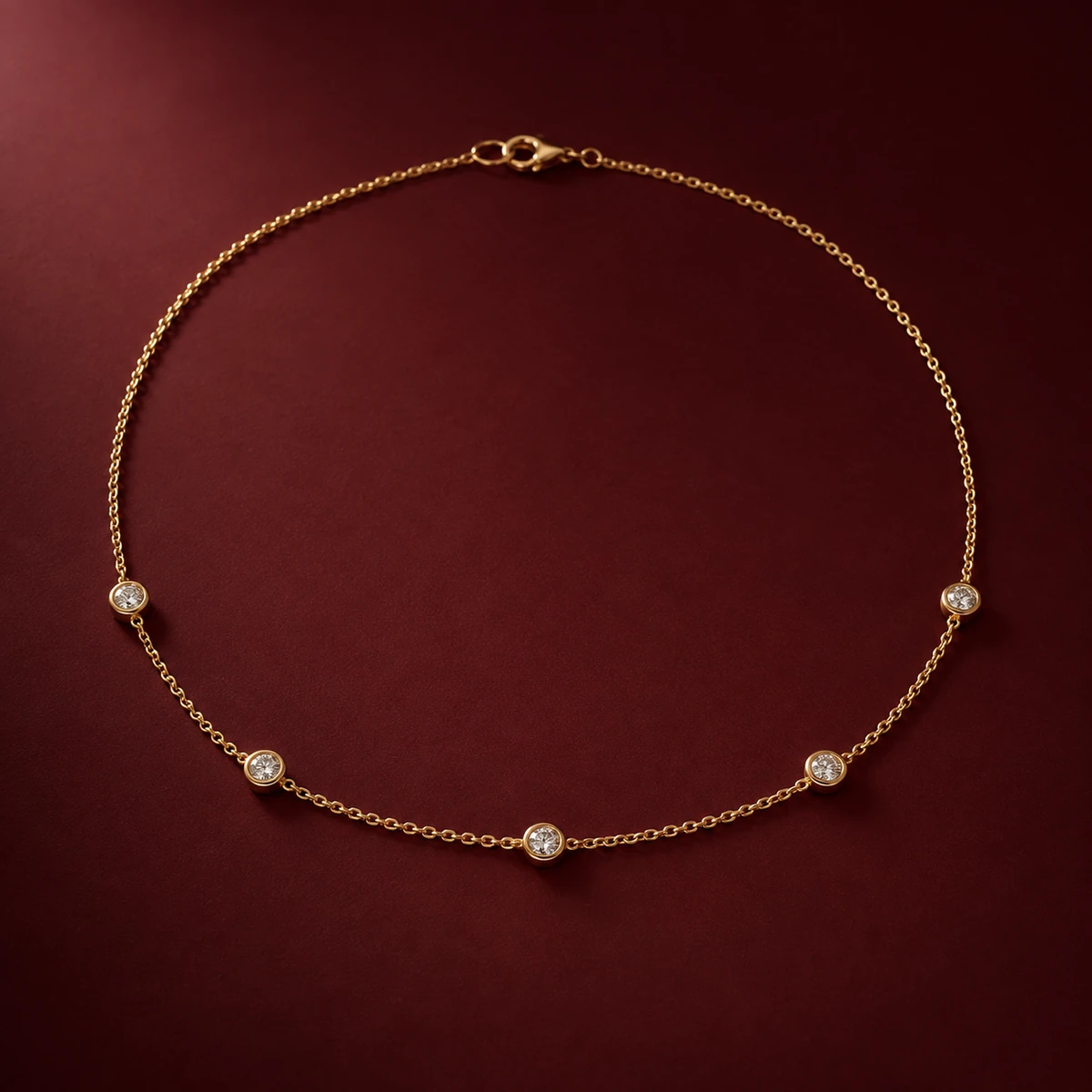
Eirene
Eirene places circles of light at even intervals along a fine chain, making repetition the defining gesture of the composition. Each bright circle marks a measured pause in the line, creating an ordered rhythm whose appeal rests in the relationship between detail and open space.
Indicative design budget: €3,900
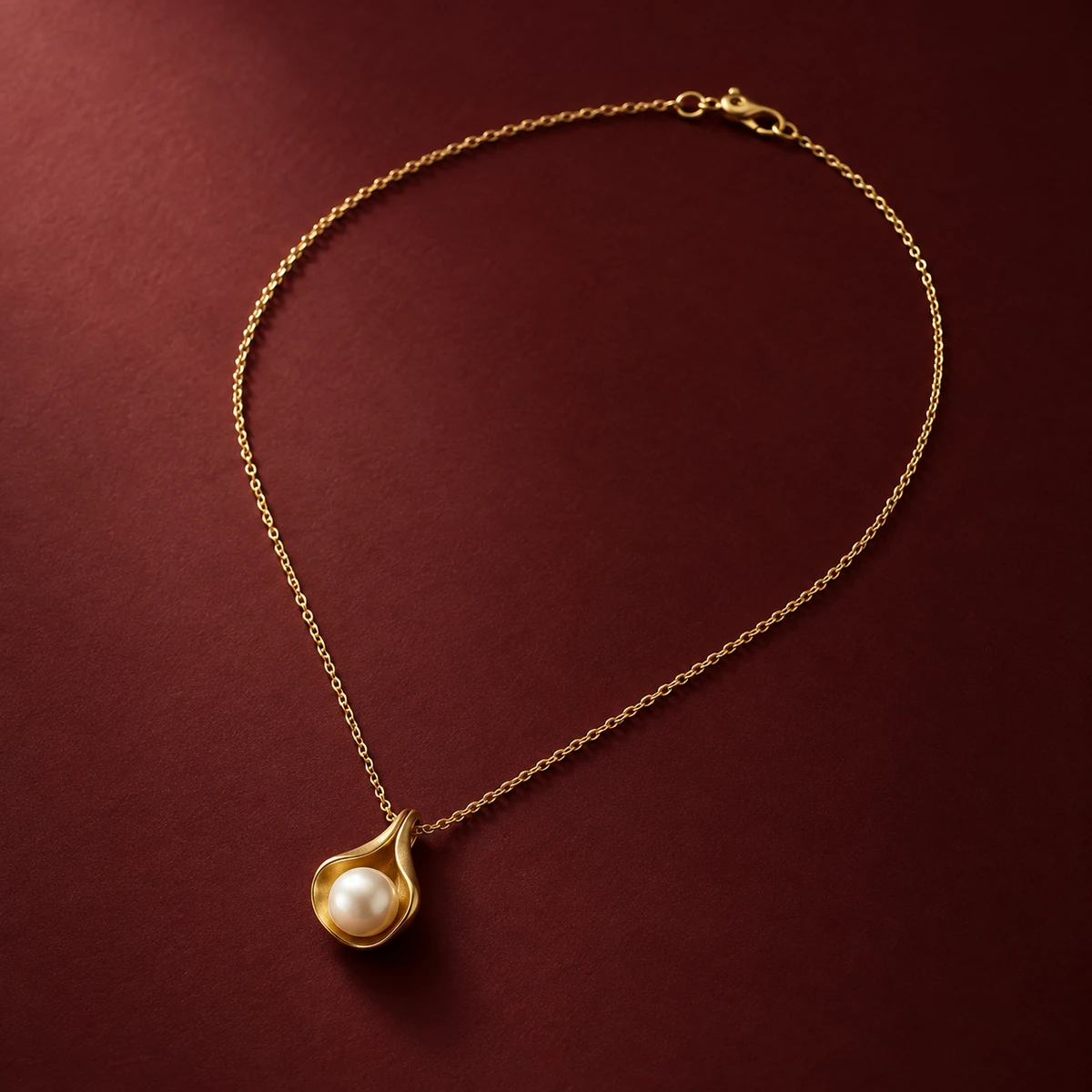
Nemesis
Nemesis places a smooth, ivory-coloured sphere within a warm, curved cradle, bringing two rounded forms into a closely composed relationship. The contrast in colour gives the sphere a distinct presence, while the surrounding curve echoes its shape and lends the design a sculptural focus.
Indicative design budget: €2,400
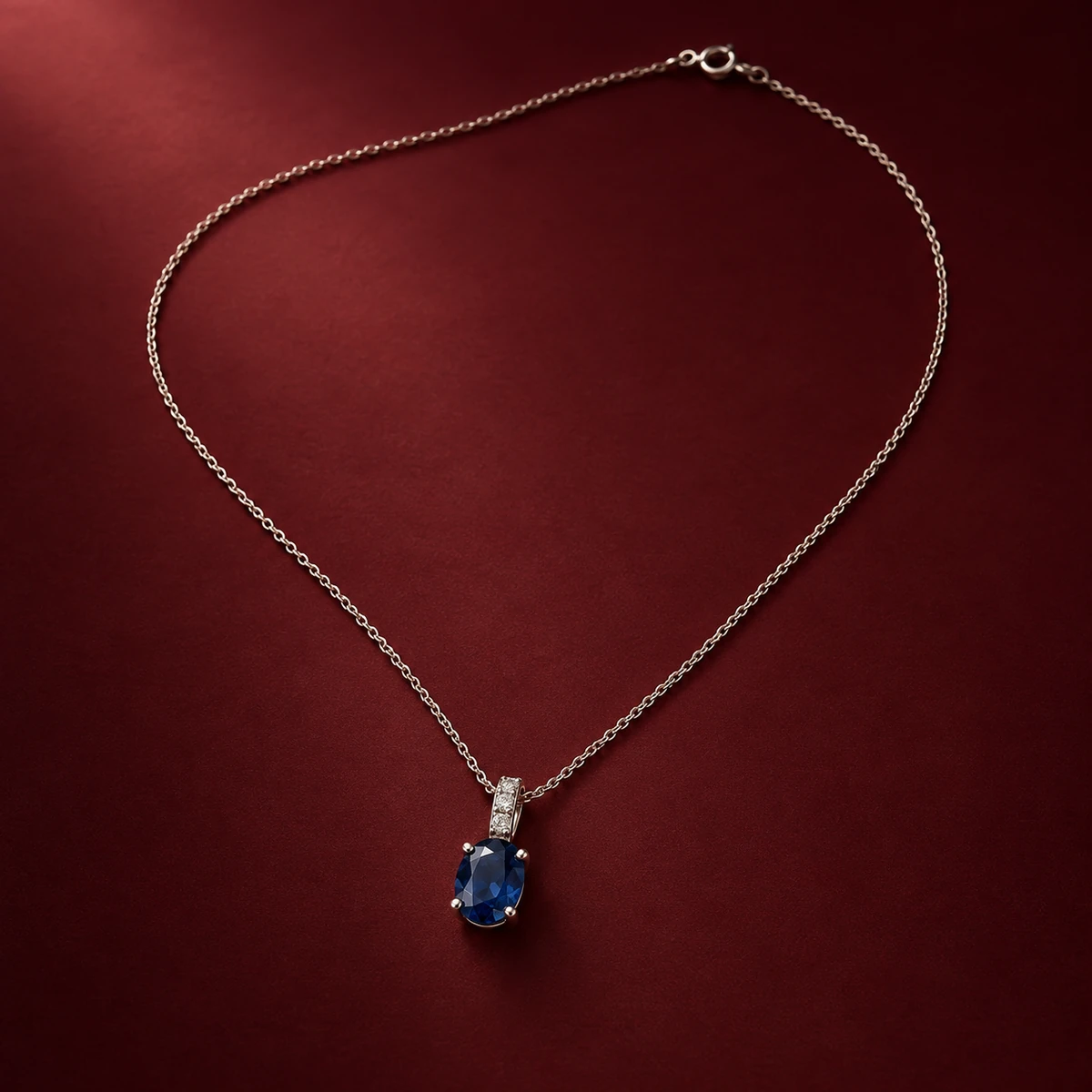
Hecate
Hecate sets an oval blue pendant beneath a small, bright connecting detail, concentrating the composition on a simple relationship between colour and light. The luminous connection introduces the rounded blue form below, giving the design a clear visual hierarchy and an understated sense of definition.
Indicative design budget: €3,600
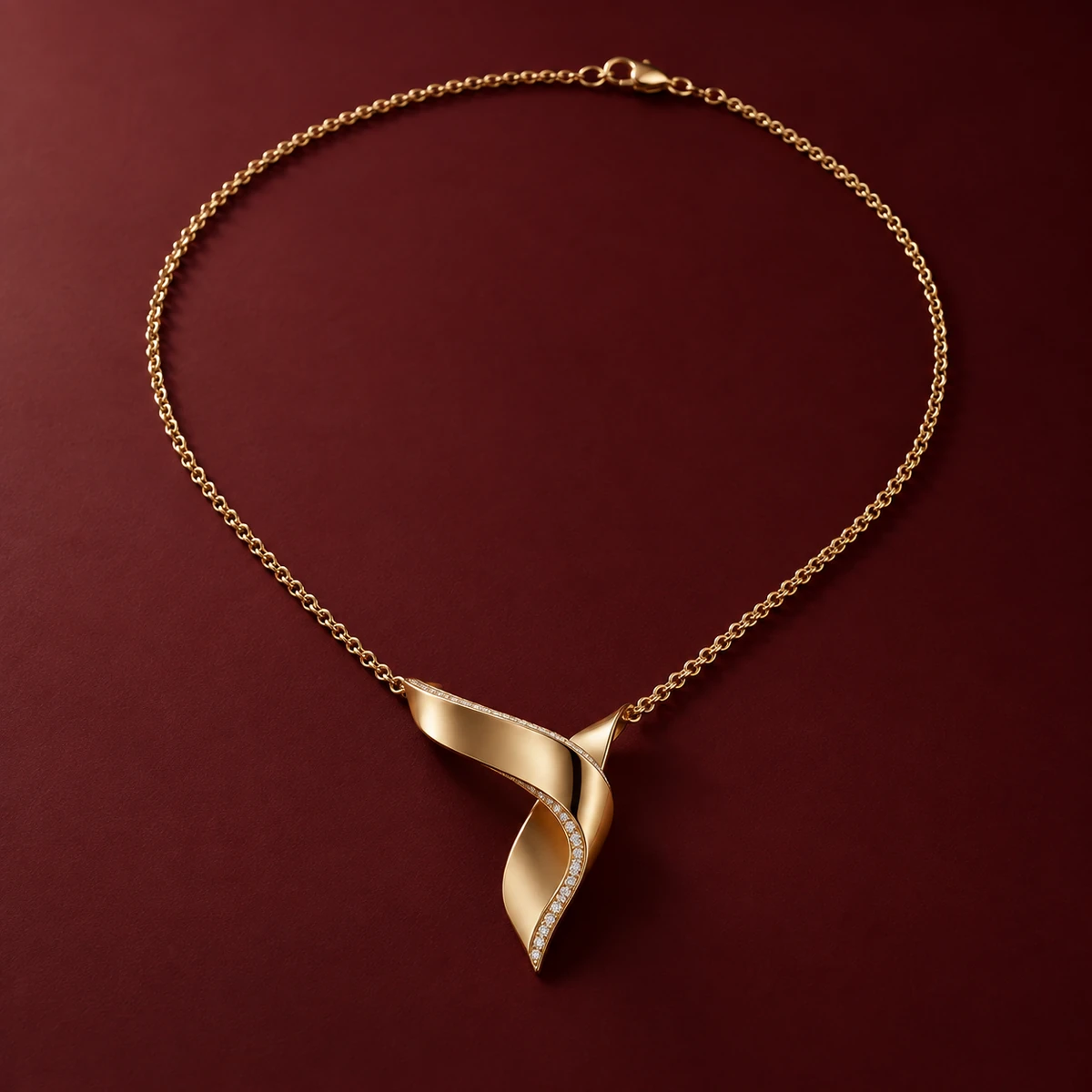
Leto
Leto shapes a ribbon-like pendant through folded planes and a single luminous edge, making the interplay of surfaces its central expression. The defined edge brings emphasis to the folds, while the ribbon form gives the composition a sense of fluidity within its structured outline.
Indicative design budget: €3,000
Asteria
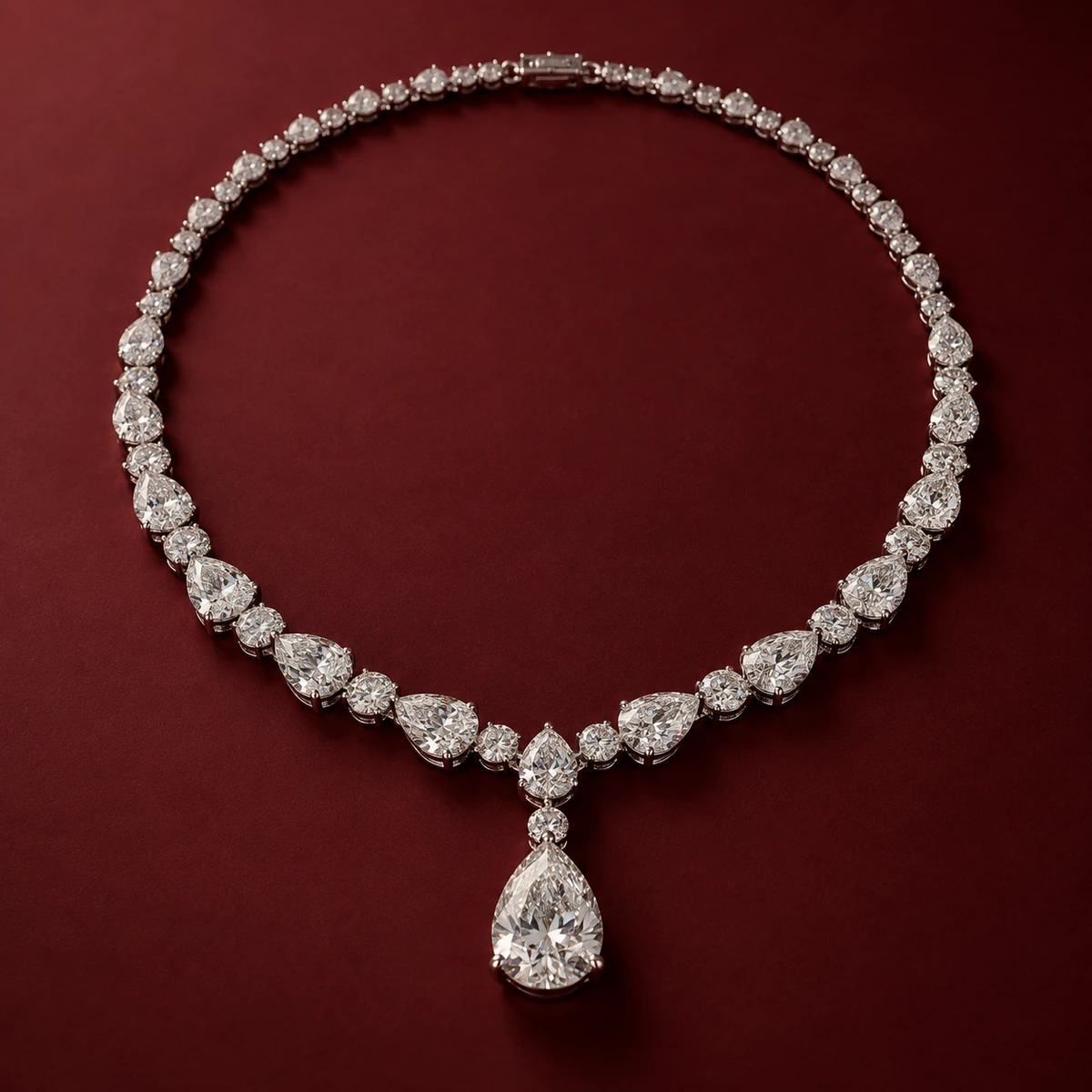
Asteria follows a graduated arc of light towards a pronounced teardrop, giving the composition a clear progression and a distinctive focal point. The changing scale along the arc builds visual emphasis, drawing the eye towards the curved form that completes the design.
Indicative design budget: €36,000
01
Find the intended position
Compare lengths with the necklines you actually wear. Record the necklace length in a stated unit, and ask whether it is fixed or adjustable. For a pendant, separate the pendant dimensions from the chain length. A close-up photograph can show detail while leaving the overall scale unclear.
02
Read the connection
If a chain and pendant are offered separately, confirm their compatibility rather than assuming any combination will work. Ask about the pendant opening, the clasp dimensions and the proposed pairing. Establish whether the stated description includes the chain, the pendant or both, and request the material details for each component.
Layer with intention
Place your references side by side and compare spacing, shape and visual emphasis. Decide whether one piece should lead or whether the arrangement should remain balanced. If you already own a necklace, bring its measurements to the discussion. Ask how the proposed pieces sit together before settling on a combination.
Keep the details together
GIA recommends protected storage rather than leaving jewellery loose where it can be scratched. Ask how to store and care for the particular chain, pendant and any stones. Keep the final component description with the purchase information, especially when several pieces make up the look you have chosen.
THE NEXT CONVERSATION
Sources & further reading: GIA — Tips on Caring for Jewelry · GIA — Ten Tips for Buying Jewelry
Choose between open space, a point and a colour field
Compare Euphrosyne, Themis and Dike without starting from a material choice. Euphrosyne uses the space inside an asymmetric triangle; Themis concentrates attention on a round central accent; Dike places a coloured rectangle beneath a smaller bright detail. Each offers a different answer to where the eye should settle. Select one of those relationships and describe why it suits your idea. This helps a personal commission begin with a clear composition instead of a list of unrelated features. The digital proposal remains a reference; actual component specifications require confirmation.
- Euphrosyne: the enclosed space helps define the form.
- Themis: a single compact point creates the centre.
- Dike: a vertical colour field carries the emphasis.
- Your preference: describe the focal relationship before choosing details.