THE REINHARD EDIT
Bracelets collection in Athens
A bracelet is experienced in motion. It accompanies the turn of a wrist, the movement of a sleeve and the small gestures of a day. Start with that relationship rather than a photograph alone: where would you like the piece to sit, and how much movement would you enjoy?
Compare bracelet proposals by form, movement and fastening. A bespoke brief can explore the particular dimensions and construction you want to discuss before an actual piece is specified. Bespoke bracelet commissions · Request a personal quote
The collection
Original digital design proposals. Budgets are indicative; materials, feasibility and a final quotation are confirmed through a personal consultation.
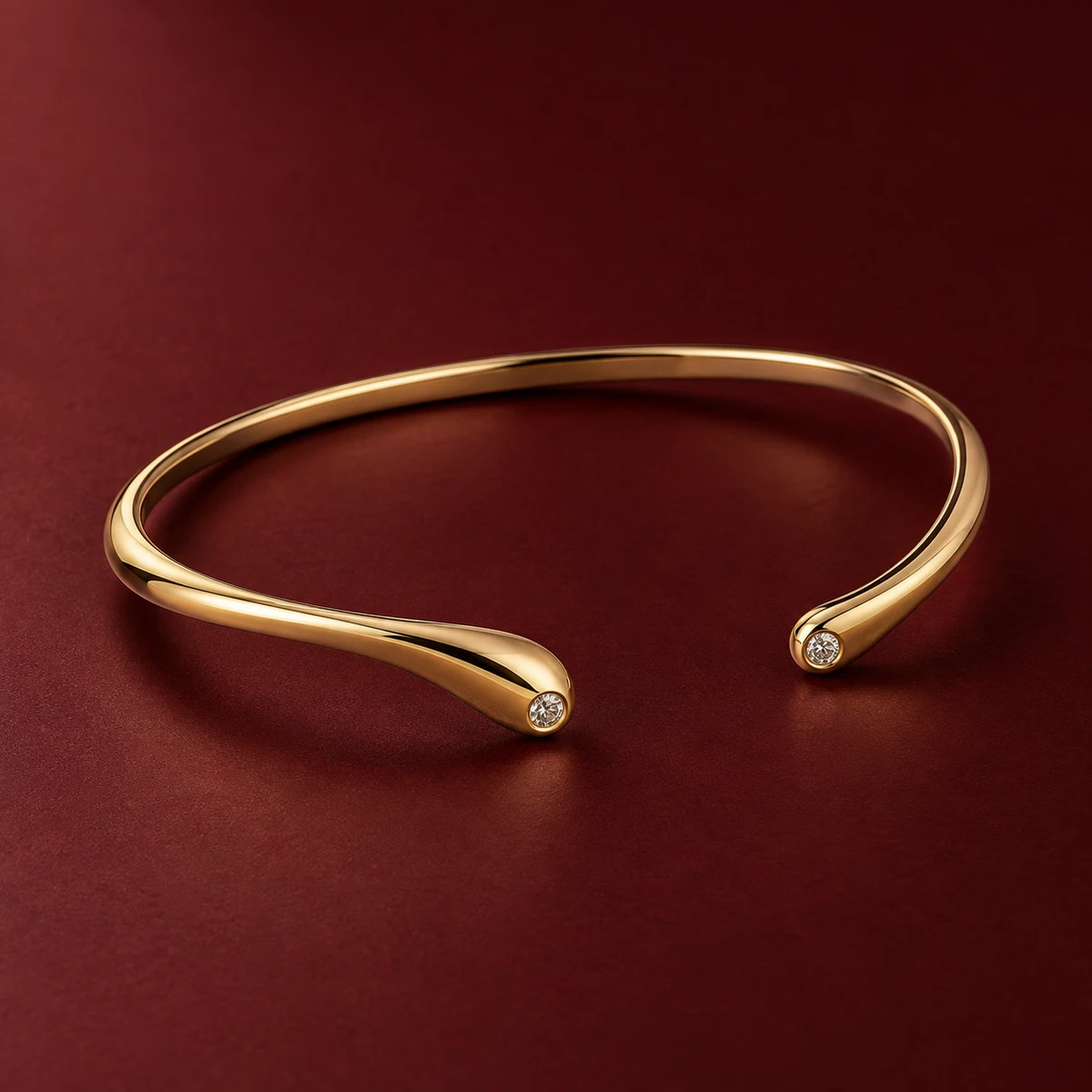
Rhea
Rhea brings tapering curves towards two discreet points of light, leaving an opening that becomes part of the design’s visual balance. The narrowing lines draw attention to their luminous endings, creating a restrained composition in which the space between forms is as expressive as the curves.
Indicative design budget: €2,700
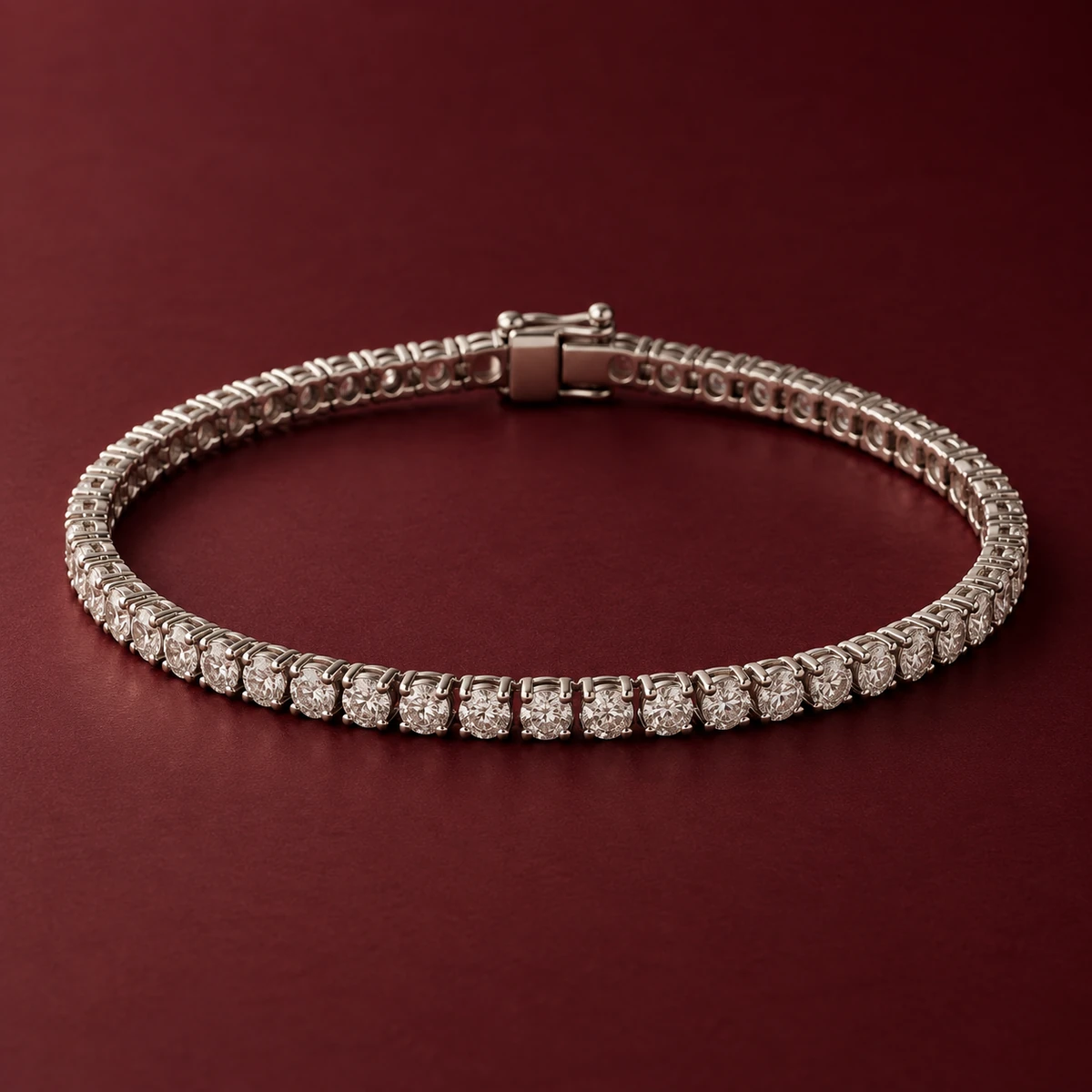
Cronus
Cronus follows the wrist with a continuous line of small, round accents, giving repetition a clear role in the design. The closely ordered sequence creates a consistent visual rhythm, allowing the circular details to read both individually and as one uninterrupted composition.
Indicative design budget: €4,800
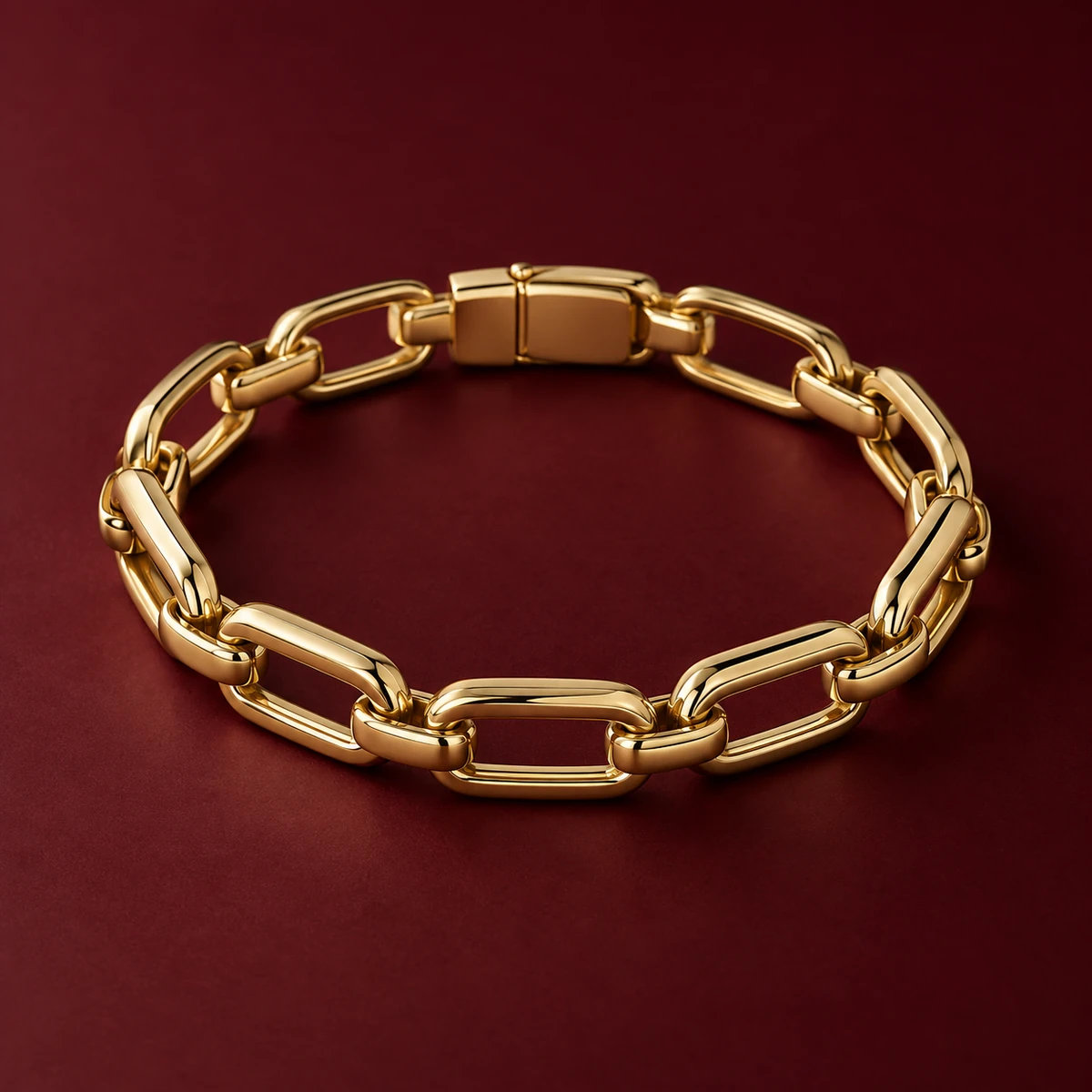
Oceanus
Oceanus arranges elongated links into an open chain, using the spaces within each form to establish a distinct and measured rhythm. Warm reflections bring another layer to the repeated outlines, giving the design its character through the relationship between linked shapes and light.
Indicative design budget: €3,900
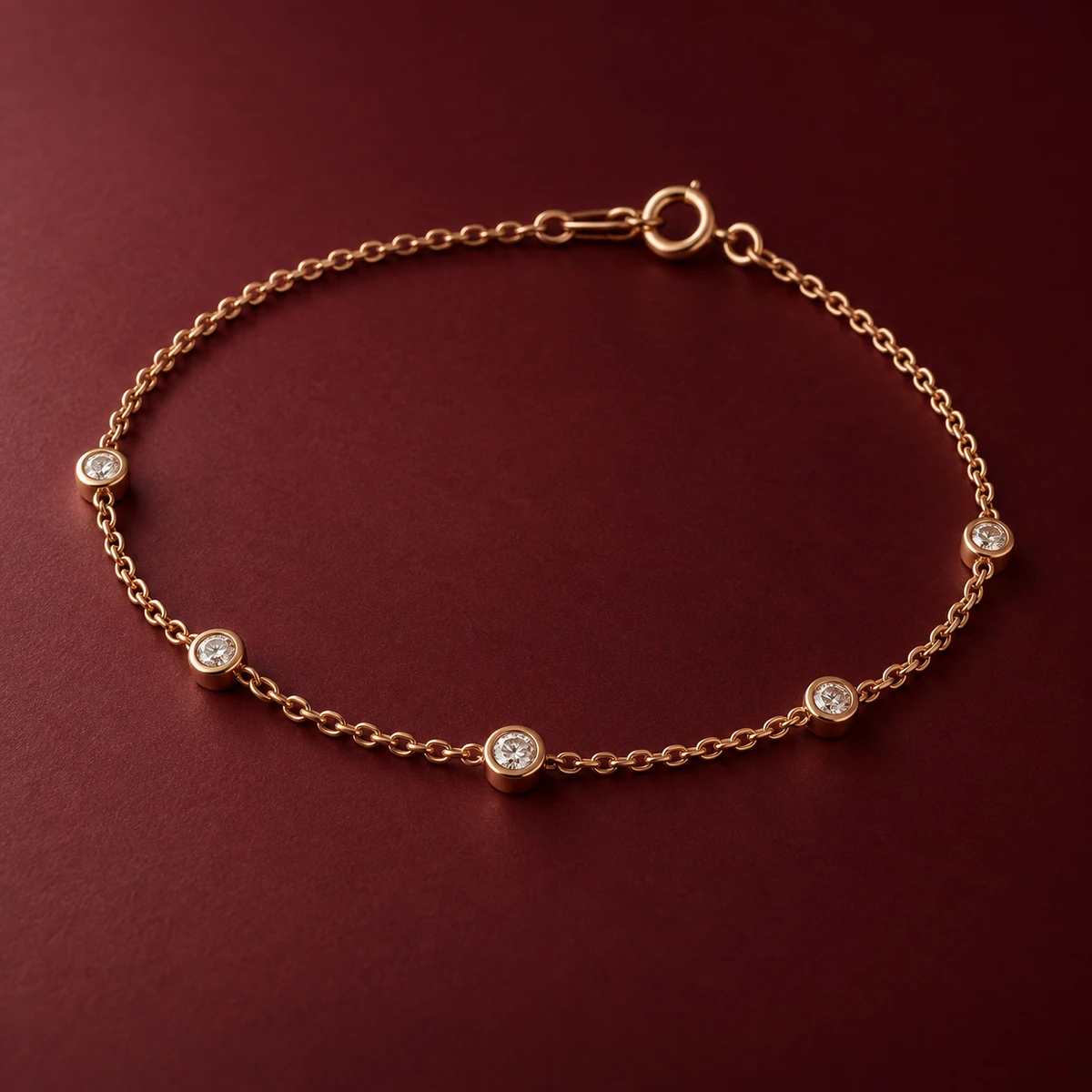
Tethys
Tethys punctuates a delicate blush-toned chain with small light accents placed at even intervals, creating a quiet sequence along its fine line. The soft colour and measured flashes of brightness work together to define the composition, with spacing giving each detail a clear visual role.
Indicative design budget: €2,400
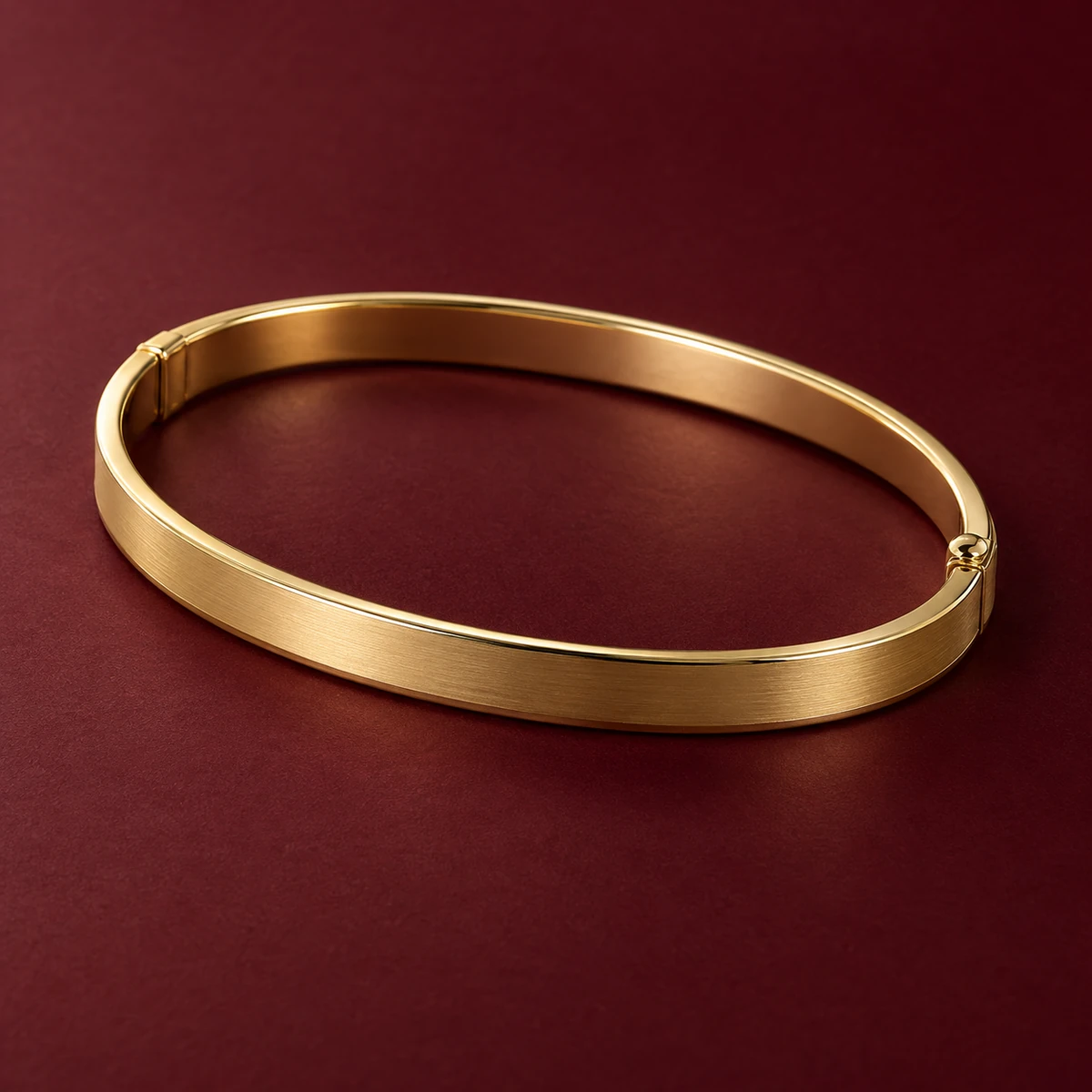
Theia
Theia gives a slim oval two contrasting expressions, pairing a subdued surface with sharply reflective edges that define its outline. This distinction keeps the form visually simple while bringing attention to its boundaries, creating a design whose presence comes from the interplay of finish and contour.
Indicative design budget: €3,300
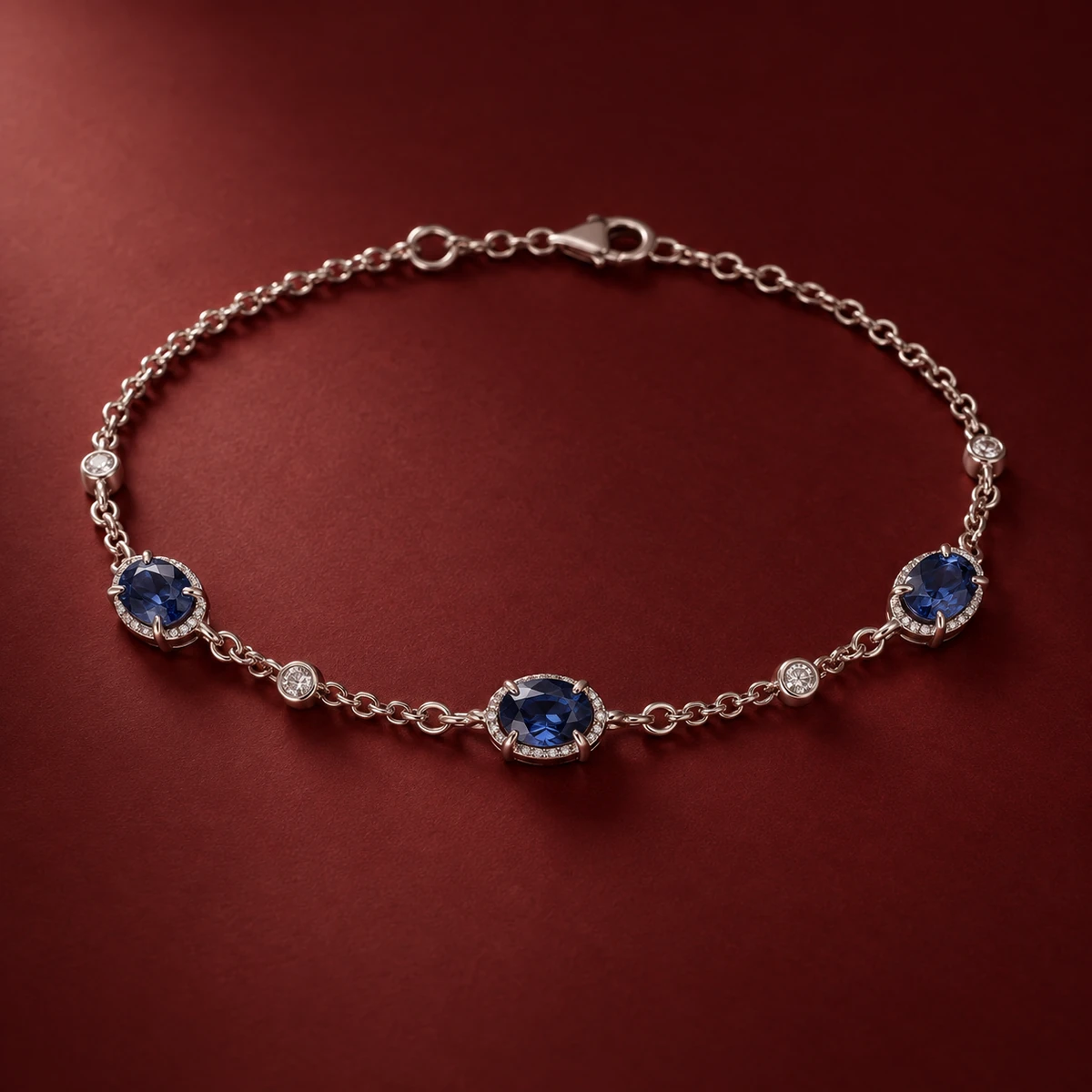
Phoebe
Phoebe introduces blue oval accents along a fine, articulated line, giving colour a repeated role within the bracelet’s composition. The rounded shapes interrupt the slender outline with a distinct visual rhythm, creating a dialogue between the blue details and the line that connects them.
Indicative design budget: €4,200
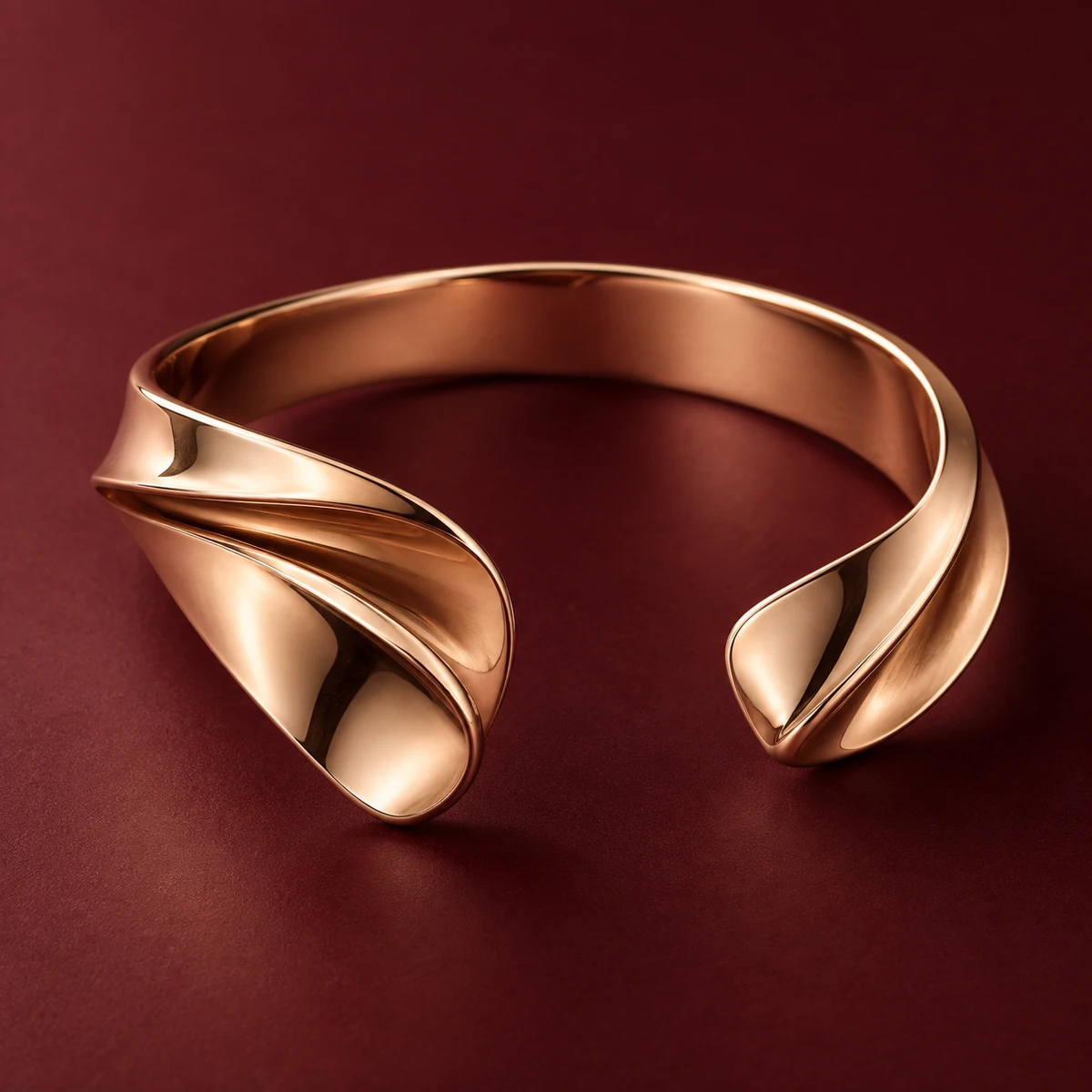
Mnemosyne
Mnemosyne gives an open cuff a flowing silhouette through asymmetric folded ends, allowing the two sides to contribute different visual gestures. The folds bring definition to the opening, while their unequal arrangement lends the composition an expressive character grounded in the shape of the outline.
Indicative design budget: €3,600
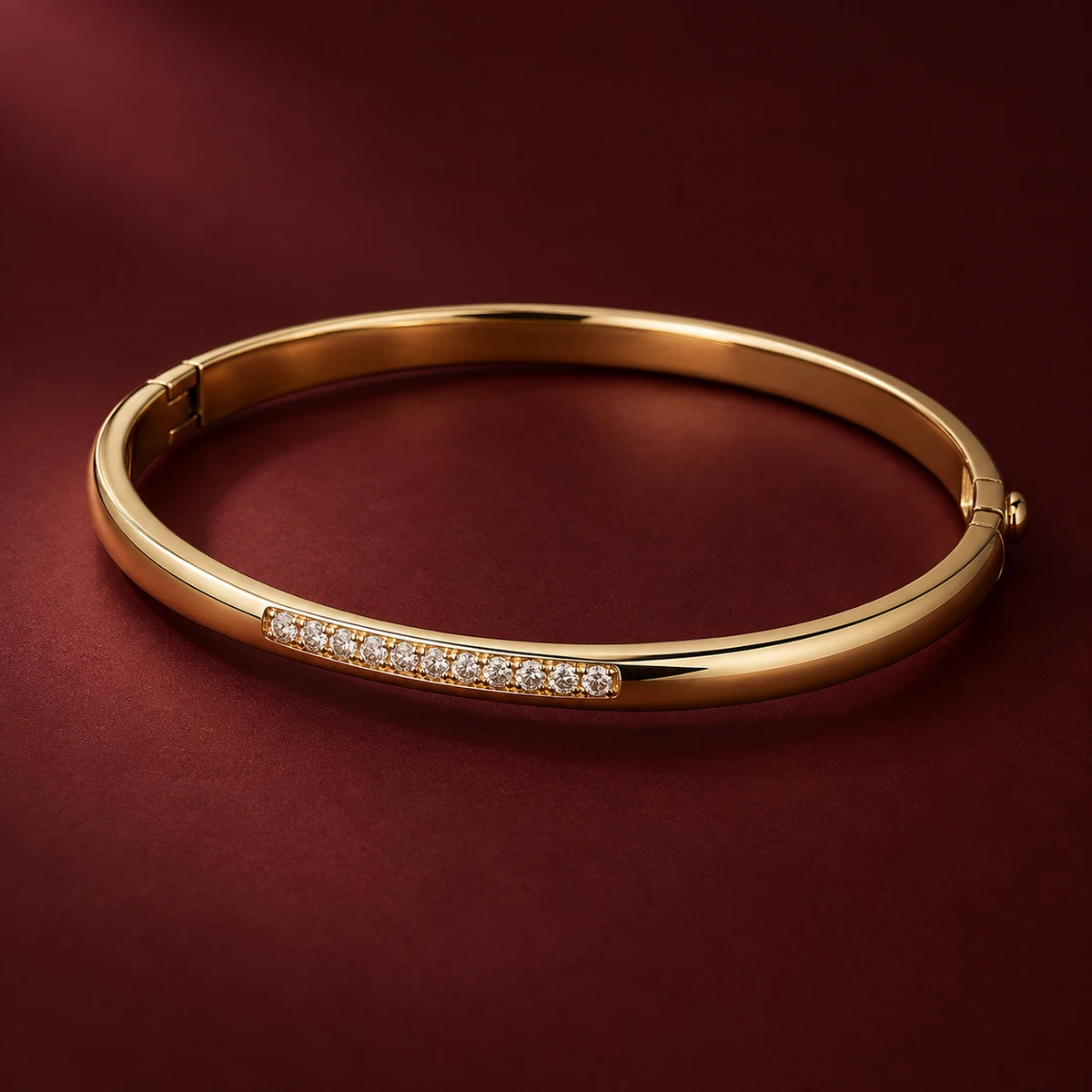
Iapetus
Iapetus centres the front of a warm oval with a short row of brilliance, giving the continuous curve a distinct point of emphasis. The compact luminous sequence contrasts with the broader outline, creating a balanced composition that moves visually between concentrated detail and uninterrupted form.
Indicative design budget: €4,500
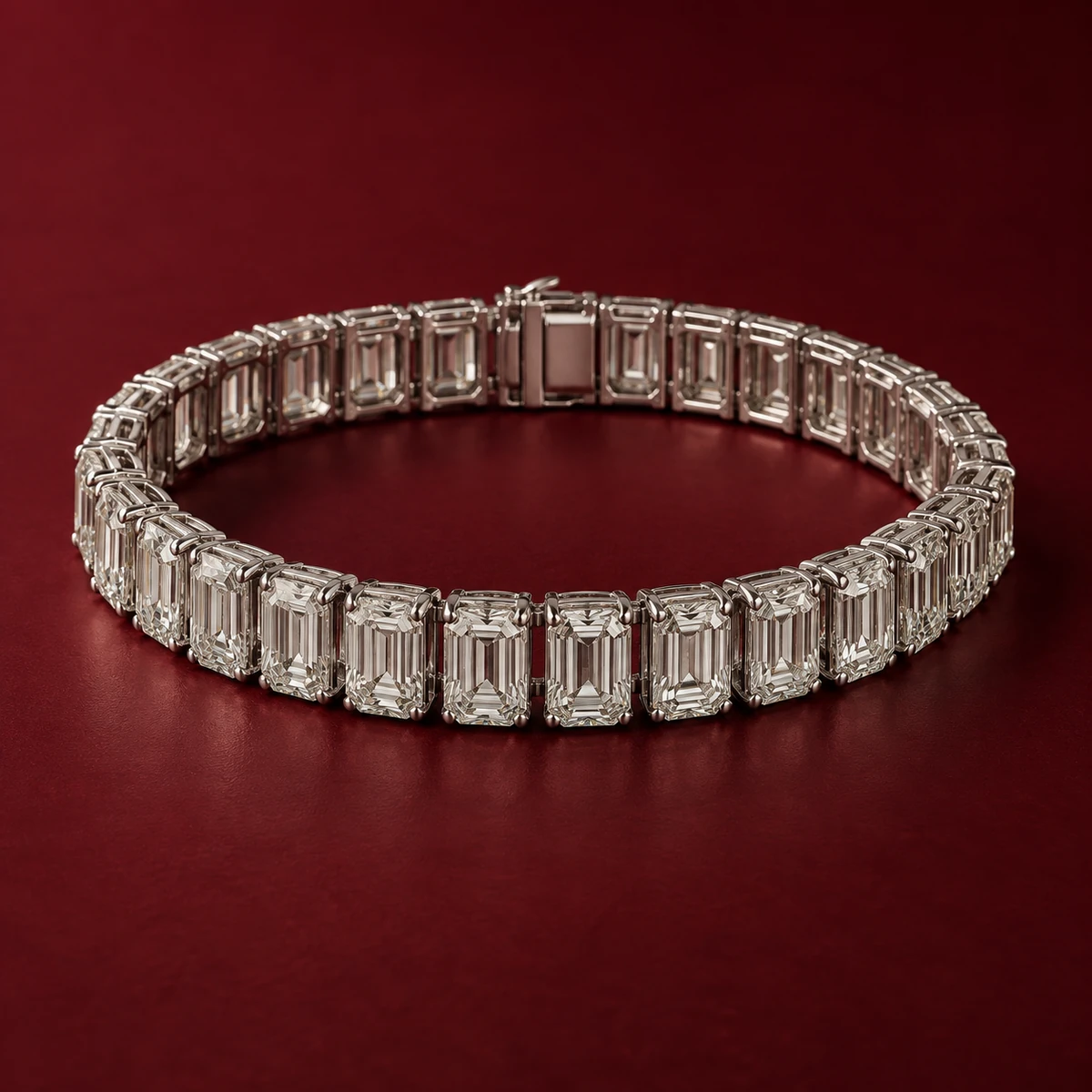
Coeus
Coeus builds its architectural expression from a continuous sequence of rectangular light, giving the bracelet a clear geometric rhythm across its outline. The repeated shapes create a structured visual language, with each rectangle contributing to the ordered composition rather than standing as an isolated accent.
Indicative design budget: €24,000
01
Choose the kind of structure
Compare a flexible chain, a closed bangle and an open cuff as different starting points. Notice the shape, the width and the way each design is intended to be put on. Ask which measurement is relevant to that specific construction; a single length does not describe every bracelet in the same way.
02
A fastening worth understanding
Request a clear explanation of the closure, including any safety element. Consider whether you can open and close it comfortably without assistance. If the design is adjustable, ask how that adjustment is intended to work. Do not assume a rigid form can be bent or a chain shortened without professional advice.
03
One piece or a shared rhythm
If you plan to wear several bracelets, compare their widths and visual weight as a group. Include a watch in the discussion if you normally wear one. Ask whether the proposed pieces are suitable to wear together and what contact between their surfaces may mean for their care.
Before everyday wear
GIA cautions that household chemicals can damage jewellery materials. Discuss your usual activities and request care instructions for the exact piece. Confirm the metal, finish, dimensions and any stones, then ask what to do if the clasp becomes loose or the bracelet no longer fits as intended.
THE NEXT CONVERSATION
Sources & further reading: GIA — Tips on Caring for Jewelry
Read three different visual rhythms
Rhea, Oceanus and Theia offer a useful comparison of how a bracelet can create emphasis. Rhea narrows towards two endpoints, Oceanus repeats open links, and Theia contrasts a subdued plane with reflective edges. Ask yourself whether you are drawn to a pause, a sequence or a boundary. Choose one rhythm before discussing a personal adaptation, rather than combining every attractive feature. The comparison describes the digital proposals’ visual language only. It does not establish their actual construction, flexibility or material, which must be assessed and specified for the commission.
- Rhea: two endpoints give the opening a visual role.
- Oceanus: repeated spaces establish a sequence.
- Theia: the edges distinguish the central surface.
- Your brief: select the rhythm you want to explore.