ATHENS · WORKSHOP IN AUSTRIA
Collections & guides
REINHARD JOURNAL · BEFORE A SOLITAIRE QUOTATION
Read a diamond grading report before comparing solitaire proposals
A useful solitaire quotation connects a specified stone with a specified ring. A laboratory document can help describe the stone, but it does not answer every design, price or purchasing question. Read the actual document before comparing headline carat weights or treating the word “certificate” as a complete explanation.
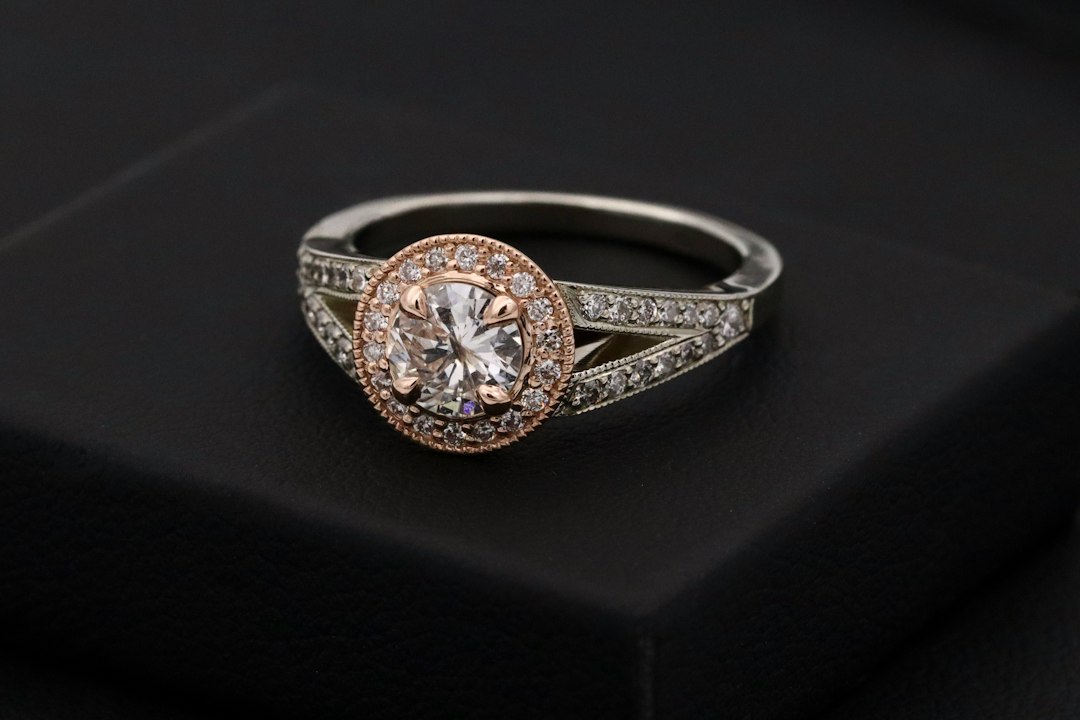
Identify the document first
Begin with the issuing laboratory, the document type, its date and identifying number. Check whether the document describes a natural or laboratory-grown diamond and note what its particular service includes. Do not assume that documents issued by different laboratories, at different dates or for different stone types follow an identical format.
This distinction matters in current research: GIA’s present services include a separate Laboratory-Grown Diamond Quality Assessment using Premium or Standard descriptions. A guide to a natural-diamond report should not be applied mechanically to that assessment. Refer to the issuing laboratory’s current service description for the document actually supplied.
Read fields as parts of one description
GIA’s guide to its natural Diamond Grading Report explains information including shape and cutting style, measurements, carat weight and grading results. Its cut-grade explanation applies to the specified standard round-brilliant context; do not infer that every shape receives the same grading fields. See GIA’s report-reading guide.
| Review | Question for the proposal |
|---|---|
| Identity | Which exact document and stone are being proposed? |
| Outline and dimensions | Which stone dimensions will the ring design use? |
| Weight and grading fields | Are the two proposals describing comparable characteristics? |
| Remarks | Which comments or disclosed treatments need explanation? |
| Physical match | Who will check the supplied stone against its documentation? |
| Ring scope | What setting, metal, size and approval stages are included? |
Keep the full description together. Selecting one attractive number and ignoring unresolved remarks makes a comparison less useful. If a term is unfamiliar, ask the responsible professional to explain what it means for the specific proposal. A search result or a photograph should not silently replace the documented specification.
Understand what an online report check establishes
GIA Report Check lets a user compare report information with its archived record. Use the official Report Check route rather than relying on a screenshot alone. Finding a corresponding record is a document-information check. It does not, by itself, physically examine the stone in front of you or establish that a seller’s photograph shows that stone.
Ask how the physical stone and its documents will be matched, who is responsible for that assessment and what happens if details do not agree. Do not rely on a home test or on a reassuring file name as a substitute for that step. Keep any remaining identity question visible before approving the stone for the ring.
A report is different from a valuation
GIA states that it does not perform appraisals. A grading document should therefore not be presented as a sale price, a future resale promise or an insurance valuation. See GIA’s appraisal explanation. Ask for the seller’s actual quotation and clarify the scope of any separately required valuation.
For a bespoke solitaire commission, also agree the setting design, metal specification, finger-size assessment and review stages. A report does not approve those decisions or establish a finished ring’s suitability for you.
An illustrative comparison
Hypothetical example, not two stones offered by Reinhard: Proposal A and Proposal B show the same headline carat weight, but one leaves the stone’s dimensions and document type unspecified. Do not label the quotations equivalent. Ask for the missing information and compare the complete stone-and-ring specification. Our quotation-comparison guide helps separate confirmed scope from open questions.
Frequently asked questions
Does a report mean the jeweller is endorsed by the laboratory?
Do not treat the presence of a document as proof of an endorsement, partnership or qualification. Check any such claim separately. This article does not claim a GIA affiliation or certification for Reinhard.
Must every report show the same fields?
No universal template should be assumed. Read the service and date on the actual document and consult its issuer’s explanation. Ask about a missing or unfamiliar field rather than filling it in from another report.
What should I share in an initial enquiry?
Begin with a non-confidential summary of your design and documentation questions. Agree any transfer of detailed documents separately, and exclude personal information that is unnecessary for the enquiry.
Explore the broader engagement-ring service or discuss your brief with Reinhard, keeping stone selection and design approval distinct.